Education is the main factor behind the current position of civilization in the course of time. Education teaches a person to discover his own being. All narrowness, prejudice, severing the economy makes the society worthy. An integral part of civilization is the rural society. The uniqueness of education has made the rural society aware of this trend of change and development. The magic touch of education at almost all levels of rural society plays a special role in rural development. The advancement of education has illuminated rural development in a new light.
* Development:
The English meaning of development in Bengali is development from the
Oxford Dictionary, “Development means advancement of a country or an area”
meaning development means the progress of a country or area.
"The development of the organism is the development of its, life
and the development of the community is the development of the which exists in
its members," McIver and Page said.
"Development is the development of human capacity," said
Amrita Sen, a Nobel laureate economist.
* UN Development Program Administrator James Dempsey has given an
acceptable definition of development. According to him, “Sustainable human
development is a development that not only achieves economic growth but also
distributes its benefits fairly. Which does not destroy the environment but
completes it which empowers the people without pushing them to the limit.
Development does not mean the development of a particular subject.
Rather, it is the overall change of the society through the positive change of
all the things existing in the society and the consequent change in the living
standard of all those living in the society.
* Rural Development:
Going to discuss rural development, I remember Rabithakur's poems. The
poet said to explain to the village,
“The farmer is plowing the field,
Weavers are called weavers, they are thrown into the water.
Their diverse workload extends far and wide.
After that, the whole family is carrying the burden.
Rural development refers to the development of rural people. It refers
to the economic, political, social, cultural, educational, value and quality of
life of the rural people.
According to some, rural development is an effort to improve the
quality of life of low-income people in rural areas and to continue that effort.
* In other words, the process by which participation in development
activities is ensured by meeting the basic needs of the rural people is called
rural development.
* Professor Arthur Janham said, “It is important to mobilize and
support the general public in rural development. For this, besides government
efforts, the role of private and voluntary organizations is very important.
* According to the World Bank, "Rural Development as a strategy
designed to improve the economic and social life of the rural people"
* Rural development is the overall development of the uneducated,
low-income, neglected people of the village and the improvement of their
standard of living through the provision of all facilities.
* Education:
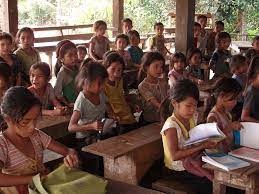
Eighty-five percent of the people in Bangladesh live in rural areas and
most of them are deprived of the light of education. Education is one of the
basic rights required to bring a nation under development. People need
knowledge to sustain life. This necessary knowledge comes through education.
Education is a process that encourages the full development of a person's
inherent qualities.
Education is the acquisition of knowledge or skills in the general
sense. Education is the process of acquiring systematic knowledge in a broad sense.
However, education is a continuous practice of achieving full development.
* In the words of Socrates, "Education is the eradication of
falsehood and the development of truth."
* Education is to create a healthy mind in a healthy body. ”
* According to Plato, "the main goal of education is to develop
the nation into a full-fledged entity and to make it fit to play its assigned
role in state life."
* Education is the method by which man acquires a perfect knowledge of
his body, mind, being, external behavior, social activities and justice and the
whole subject and develops himself as a perfect human being.
* Types of education:
There are two types of education. E.g.
1) Formal education (formal education)
2) Informal Education. (Non-formal education)
* Formal education: All the education that we get from the institution
is called Formal Education. For example: school, college, university etc.
* Informal Education:
The education that we get through experience without any formal
educational institution is called Informal Education. We usually get all these
education through family, society, political environment, classmates etc. Its
scope is wide.
* Reasons for low rate of education in villages:
1) Lack of school and college.
2) Indifference towards education.
3) Poverty.
4) The indifference of the government.
5) Superstitions and obstacles to women's education.
* Importance of education
* The role of education in rural development
This is our golden Bangladesh with 6 thousand grams. The development of
rural Bangladesh is largely dependent on rural development. And for that we
need rural development through proper education. The role of education is
discussed below:
* Social Impact:
1) Prevention of child marriage: As a result of increasing the rate of
education in the village, people are becoming aware day by day. As a result,
the rate of child marriage is declining. At present, the government has fixed
the age of marriage for boys at 21 and for girls at 18.


No comments:
Post a Comment